Saturday, March 30, 2013

KALIalkemi

I want to introduce my friend Simbi Kali...artist, photographer, writer, actress, alchemist (Qgong4life@aol.com).  She has just started a new product line "KALI alkemi" that features essential oils, bath salts and fragrances.

Over the years she has gifted me with oils and sprays (for the home) that were just what I need, when I needed my mood altered.


Simbi has been such a support to me...taking  many photos of my jewelry as well as being a patron of my work.   Back in July of 2009 I featured a ring I made for her.  I had one trying time finding Hessonite Garnets.  But it was a pleasure also.


 When Simbi began to coordinate her "looks" for promoting "KALIalkemi" she asked me if I had any pieces that might work with the image she was trying to create.  As we talked a memory was pulled out of the back of my mind of very organic vine like jewelry that I saw and tried to recreate a few years ago.  That night I began to pull out incomplete pieces; a focal of copper and brass that featured a Labradorite briolette, veining earnings and necklace that I had cut up so I could use the beads on another project.   I pick this focal because Labradorite is for me the physical manifestation of the word--alchemy.

I had some quality Critne chips I brought years back from Silver Sky in North Hollywood.  I had organized the Citrine on loops of copper wire by color.  The richest color on one loop, palest on another and all of those in-between on a third wire loop.  When Simbi saw these she automatically put the loops and focal together as if the loops were an element not just a way to organize some of the chaos in my work space.


On the vining side of the adornment I decided that my color pallet would include every copper,  green copper,  gold copper,  cream and clear bead and fresh water pearl I had in my stash.
 The other side of the adornment is hand crocheted to create a soft--yes the metal wire is soft and flexible, as many of you know who crochet or knit with wire.

While Simbi wore the adornment as a head dress it can also be worn as a necklace...as soon as I add a closing.


Tuesday, February 12, 2013

Wire Cages an Alternative to Drilling Jewelry Elements

I love this technique and the results it produces. So I've re-posted the article that this video was a part of.  Re-posted from The Beading Gems Journal: Jewelry Expression in Bloom.

When it is too cold to go outside is a good time to reminisce over your previous summer holidays and maybe plot your next one. Even better if you have a project to do to preserve summer memories.  Here are more sea glass jewelry tutorials for all you hoarders out there!


If you can drill holes in the sea glass pieces yourself, try making a wire crochet necklace (above) as shown by Cyndi Lavin's tutorial over on Beading Arts.  You canpurchase frosted fake sea glass beads too if you don't have any real ones on hand.

One way to avoid having to drill is to wire wrap large pieces of sea glass.  I have covered the tutorials before (see links below) but here is a lovely video tutorial by Gayle Bird


She demonstrates a really easy way of making a wire cage by using wire twists.  Just make sure you start off with a generous length of wire because it is difficult to predict how much you need with such an informal method. She introduce kinks in the wire which are necessary to tighten the "cage". They do add charm to the design.


Not everyone can drill holes in sea glass nor do they wire work, so check out this even easier solution!  Just glue the pieces onto a disc and loop bracelet. This works also if the sea glass fragments are too small to drill or wire wrap.  The idea is from Martha Stewart.com


Before You Go:

Other "Wire Cage" articles on this blog;


Saturday, February 2, 2013

Adinkra in Brooklyn


by MARY MARTIALAY on NOVEMBER 16, 2011 

reposted from The Approach features the innovative ideas, creative endeavors, and research discoveries of students and faculty at Rensselaer Polytechnic Institute.  http://approach.rpi.edu/2011/11/16/adinkra-in-brooklyn/
__________________________________________________
"black is the nite (Round the World)" a stop motion animation by Pamela Sunstrum on exhibit at MoCADA
Just a few weeks ago I was writing about fractals as part of a post about a piano concert featuring Debussy’s La Mer. Wouldn’t you know it, they’ve cropped up again.
An exhibit opening this weekend at the Museum of Contemporary African Diasporan Arts (MoCADA) in Brooklyn - with ties to Rensselaer - will feature several fractal-based works. The exhibit is titled “Feed Your Head: The African Origins of the Scientific Aesthetic,” and, according to the description on the MoCADA website, the works featured  “join together two visual artists with a physicist and ethnomathematician to explore the aesthetic convergence of science and art.”
The ethnomathematician is none other than Rensselaer Professor Ron Eglash. Eglash, a professor in our Department of Science and Technology Studies, has made fractals a keystone in his efforts to show minority students the cultural relevance of the STEM (science, technology, engineering and mathematics) fields.
Here’s how Eglash summarizes his work:
Fractals are patterns that repeat themselves across several scales. They were first thought to be purely mathematical abstractions, but in the 1970s mathematician Benoit Mandelbrot realized that many natural structures have this “scaling” characteristic: trees are branches of branches, rugged mountains have peaks within peaks, clouds are puffs of puffs, and so on. Fractals became an exciting new frontier for mathematical models of nature.
In the late 1980s I noticed that aerial photos of African villages also tend to be fractals: circular houses in circles of circles; rectangular houses in rectangular clusters. A Fulbright research fellowship allowed me to spend a year travelling in Africa interviewing the artisans who created these structures. I found that these patterns were intentional and that the repeating process of shrinking scales— what mathematicians call “recursion”—often symbolized recursive cosmologies, the infinite regression of kinship, the self-generating power of life, or other concepts that mapped fractals to spiritual and social ideas. Fractals showed up not only in African architecture, but also in African textiles, sculpture, hairstyles, metalwork, and many other designs.
Thanks to funding from the National Science Foundation, we have developed educational software that allows K-12 teachers to use these African fractals in the classroom (www.csdt.rpi.edu). Architects working in Africa have also started to look at fractal structure for contemporary buildings, and there is even an entire university campus planned for Angola which will have a fractal layout.
As for the project, Eglash said:
We began our discussion with a focus on the work of Sylvester Gates, who has been visualizing his supersymmetry theory with some diagrams he calls “adinkra,” after the Ghanaian print tradition. I described some of the work I had been doing on adinkra in Ghana, and Kalia Brooks, the curator, suggested we make adinkra the central theme.
A few months later Taena Richards contacted me and asked about an adinkra symbol she had seen called “linked hearts.”
 
Eglash says this pattern is slightly different from a traditional Ghanaian adinkra pattern (in which the hearts would be more circular, reflecting the actual shape of an animal heart). Nevertheless, he used her version as the basis for a fractal which he returned to her:
The finished piece is a collaboration between Eglash, theoretical physicist Sylvester  Gates, and artists Pamela Sunstrum and Richardson (full disclosure – “black is the nite (Round the World) ” - the image of which opens this post - is not one of the pieces on which he collaborated, although it will be featured in the exhibit).
As part of the exhibit, on December 6, MoCADA will offer a workshop for educators on using African arts to teach STEM, run by Rensselaer Professor Audrey Bennett.
The exhibit will be on view November 17, 2011 to February 25, 2012.

Friday, April 13, 2012

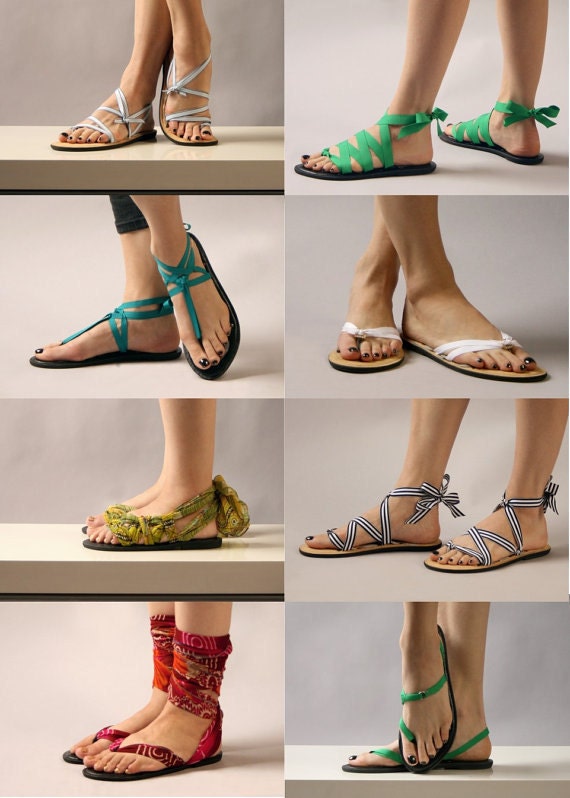
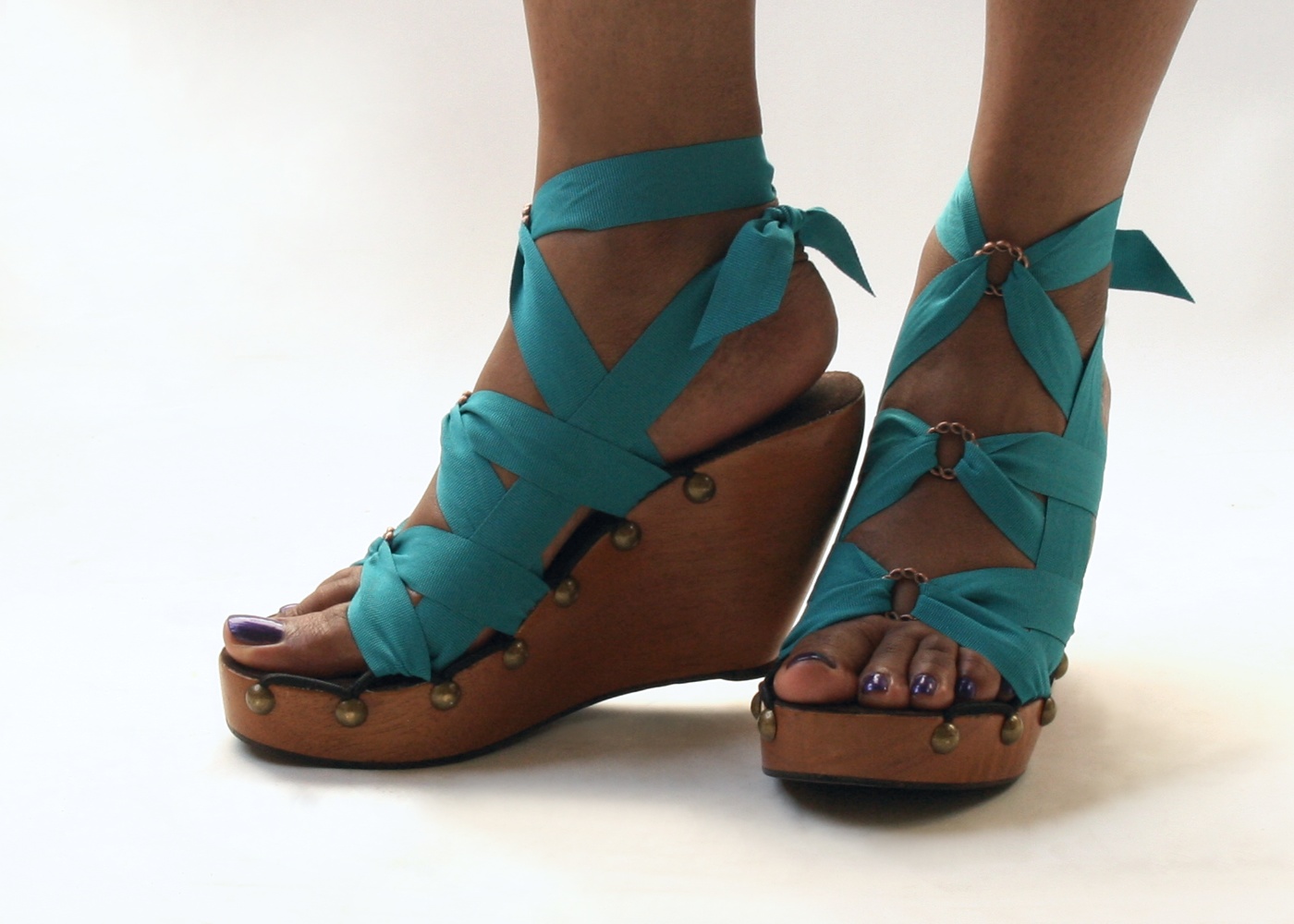
Mohop Shoes makes my spirit dance

 Size 9 - Moped by Mohop Handmade Interchangeable Sandals - Thong StyleThis is just a sample of what you will see at Mohop Shoes.  They are all over the web...Website: http://www.mohop.com/.  I first saw them on Etsy (http://www.etsy.com/shop/mohop)

The following copy is from their Esty shop...Mohop shoes are vegan and eco-friendly, comfortable, and best of all, allow nearly infinite design options with just one pair of soles. Simply lace any ribbon through our patented elastic loops to create your own one-of-a-kind, custom-fit pair! 

Tuesday, April 10, 2012

Monday, March 12, 2012

Ancient Jewellery Techniques

I found this video when I was looking for a video on "S" coils and Egyptian coil.  This is a beautiful video about a beautiful ancient art.

Tuesday, February 14, 2012

Jewelry 4 the hand - Kelli Clarkson made me do...update


I sometimes post my work on jewelrylessons.com for support and to get ideas.  Another user of the site, 


Pam was so helpful in finding images of not only Kelly Clarkson wearing the hand jewelry that inspired me but she also found images of Nicole Scherzinger wearing the "bracelet."  

She shared a link on "Curly Fries" blog (http://kaprayshapray.blogspot.com/2011/11/glamorous-accessories-hand-cuffs-as.html).  The story on the blog about Nicole Scherzinger wearing the bracelet  features images of other "hand bracelets" that show the back and front of the adornment.